
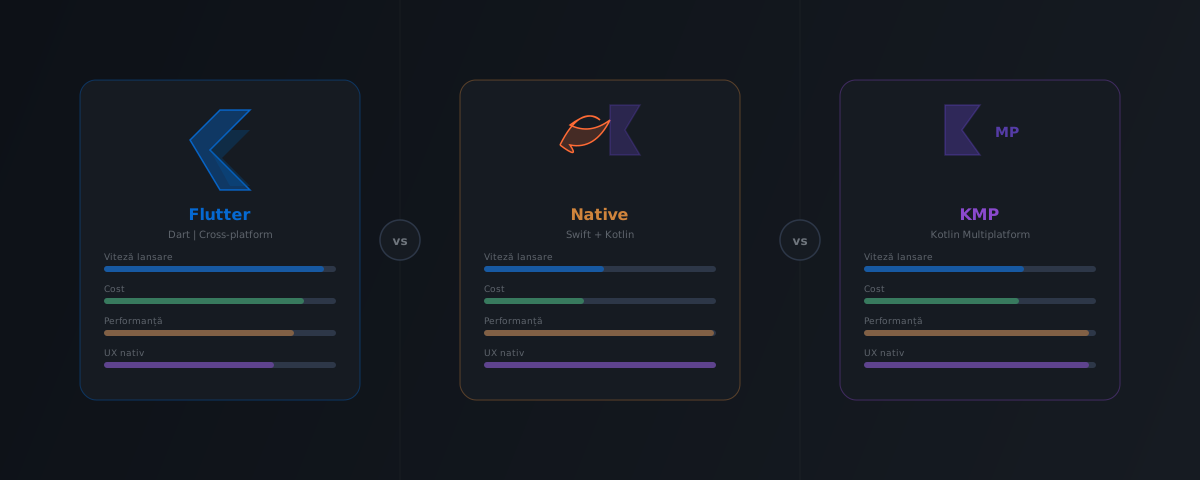
"What technology should we use for the mobile app?" — it is one of the first questions in any project. And there is no universal answer.
This guide helps you choose based on your context, not based on hype.
In short: Native is only worth it for apps with extreme performance requirements (games, AR). Kotlin Multiplatform is a solid option if your team already writes Kotlin.
The Options at a Glance
Flutter
- Language: Dart
- Codebase: single — one codebase for iOS, Android, web, and desktop
- UI rendering: custom engine (Impeller) — does not use native platform components
Native Development
- Languages: Swift (iOS) + Kotlin (Android)
- Codebase: separate — two distinct applications
- UI rendering: native platform components (UIKit/SwiftUI, Jetpack Compose)
- Maturity: industry standards with the largest ecosystem
Kotlin Multiplatform (KMP)
- Language: Kotlin
- Codebase: shared business logic + native UI per platform
- UI rendering: SwiftUI on iOS, Jetpack Compose on Android (or Compose Multiplatform)
- Maturity: stable for Android and iOS
Comparison on Key Criteria
Performance
| Criterion | Flutter | Native | KMP |
|---|---|---|---|
| Startup time | Good (Impeller) | Fastest | Identical to native |
| Complex animations | Excellent | Excellent | Excellent (native UI) |
| Memory usage | Moderate to high | Optimal | Optimal |
| Platform API access | Via plugins | Direct | Direct (expect/actual) |
Time to Market
- Flutter: fastest — one codebase, hot reload, ready-made widgets
- KMP: moderate — you share the logic, but build the UI twice
- Native: slowest — everything is built twice
User Experience (UX)
- Native: the best — native components, gestures, transitions, everything "feels" natural on the platform
- KMP: same as native (the UI is native)
- Flutter: very good, but with subtle differences — scroll physics, page transitions, pickers may look or feel slightly different from native
Ecosystem and Libraries
- Native: the richest — access to every library in the platform's ecosystem
- Flutter: large ecosystem (pub.dev), but some plugins for native functionality may have delays or limitations
- KMP: access to the Kotlin/JVM ecosystem + native Swift libraries on iOS
Hiring and Teams
- Native: easiest to recruit for (Swift and Kotlin are mainstream languages)
- Flutter: large community, but Dart is more niche
- KMP: existing Kotlin developers can transition easily; the ecosystem is growing rapidly
When to Choose Each Option
Choose Flutter when:
- The budget is limited and you want both platforms fast
- You are building an MVP or new product and time-to-market matters
- The app is content-driven (e-commerce, dashboards, catalogs, forms)
- You also want web/desktop from the same codebase
- Your team already has Flutter/Dart experience
Typical examples: e-commerce apps, delivery platforms, internal business apps, startup MVPs.
Choose native when:
- The app requires deep platform integration (HealthKit, ARKit, Widgets, Live Activities)
- Performance is critical (games, audio/video processing, camera apps)
- You have the budget for two dedicated teams and want flawless UX on each platform
- You are targeting a single platform (iOS only or Android only)
- You work in a regulated industry where you need maximum control (fintech, healthcare)
Typical examples: banking/trading apps, complex media apps, games, AR/VR apps.
Choose KMP when:
- You have complex business logic that must be identical on both platforms (financial calculations, validation rules, data synchronization)
- You want native UI on each platform, but do not want to write the logic twice
- Your team is already familiar with Kotlin
- You are building for the long term and want flexibility — you can adopt Compose Multiplatform gradually
Typical examples: fintech apps, SaaS platforms with demanding UX clients, enterprise applications.
What Should Not Influence Your Decision
"Native is always better"
Not if the budget runs out before launch. A well-built Flutter app beats a half-finished native app.
The Brainic Approach
At Brainic, we choose the technology based on the project, not on preferences:
- Flutter — our first recommendation for most business projects
- Native (Swift/Kotlin) — when the project truly requires deep platform integrations
- KMP — for clients with complex shared logic and strict native UX requirements
The technology discussion is part of the discovery phase. We do not choose before understanding the requirements.
Explore Brainic's services and discuss your mobile app requirements, whether or not it includes AI.